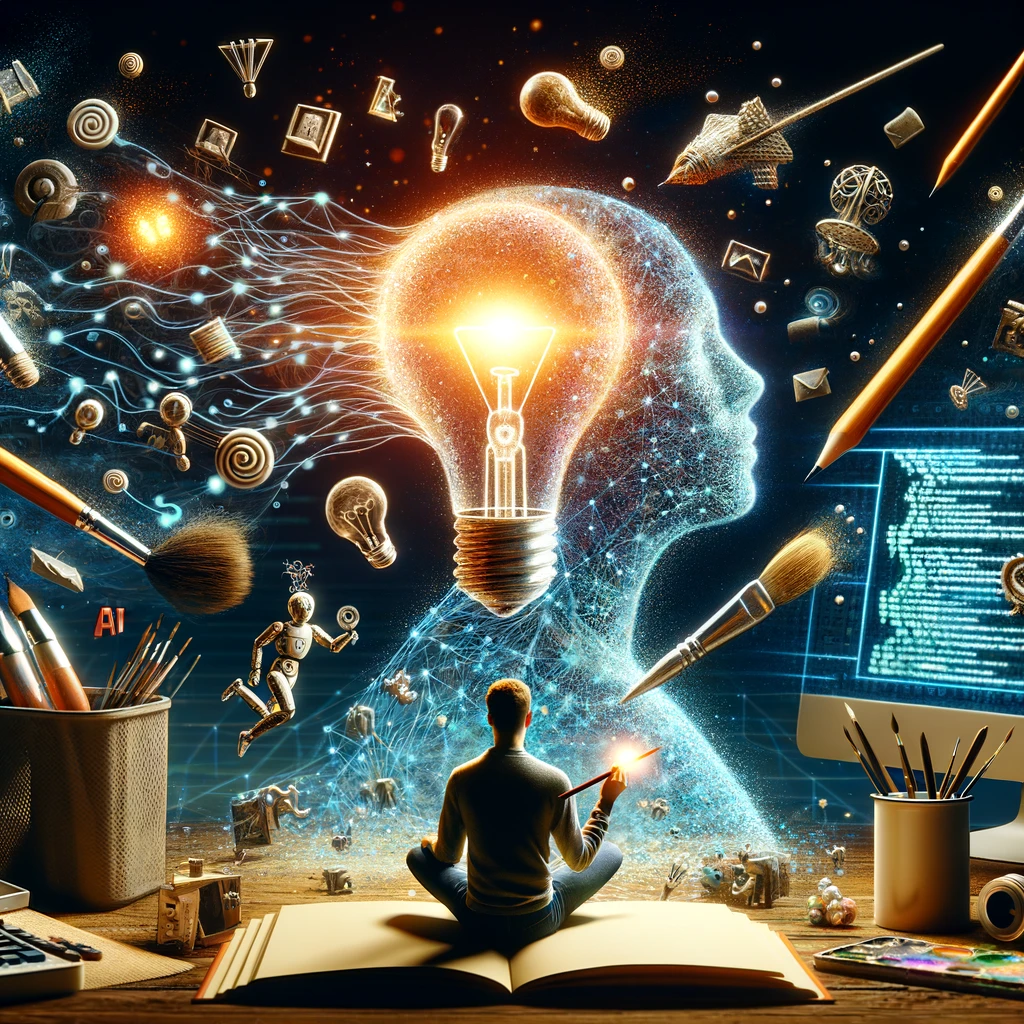
Artificial intelligence, particularly in writing, raises the question of whether it fosters laziness or aids creativity. The primary goal of writing is to communicate ideas, not just the act of writing itself. Learning to write well, akin to mastering sculpture to express ideas, was a necessary skill for idea dissemination.
The advent of AI tools that streamline and simplify this process does alter the nature of artistic creation to some extent. It introduces a co-creative element, where the AI assists in articulating ideas more effectively, much like how AI can transform someone with no drawing skills into a visual artist. This doesn’t lead to laziness; rather, it unlocks new avenues for expressing creativity that were previously inaccessible.
The democratization of creativity is another significant aspect. AI levels the playing field, allowing those who may not have strong writing skills to share their ideas effectively. This is similar to how calculators didn’t diminish intelligence but instead spurred scientific advancement by simplifying computations.
Thus, rather than fostering laziness, AI can enfance our capabilities and accelerates creative and scientific progress. It can empower more people to express their ideas, regardless of their innate writing or artistic abilities.
 Martin Pham Dinh